How to Choose the Best Platform Footwear Supplier?
Choosing the best Platform Footwear supplier requires more than comparing unit prices. The right partner must balance design, comfort, durability, production capacity, and responsible sourcing. According to the World Footwear Yearbook 2024, global footwear production reached approximately 23.9 billion pairs in 2023. That scale creates opportunity. It also increases supply-chain risk.
Look closely.
A reliable supplier should provide material specifications, factory information, inspection records, and realistic lead times. The supplier should also explain how platform soles are tested for bonding strength, flexibility, slip resistance, and weight. These details matter. A visually attractive shoe can still fail after several wears. The American Apparel & Footwear Association has repeatedly highlighted traceability and supply-chain transparency as important industry priorities. Meanwhile, Grand View Research estimates continued growth in the global footwear market, driven partly by changing consumer preferences and online retail. Growth alone, however, does not prove supplier quality.
Matt Priest, president and CEO of the Footwear Distributors and Retailers of America, has emphasized, “A supply chain is only as strong as its weakest link.” This principle applies directly to Platform Footwear sourcing. One weak outsole, delayed component, or unclear compliance document can damage an entire collection. Supplier audits, sample testing, production visits, and written quality standards should work together. No scorecard is perfect. That is worth admitting. Yet a structured evaluation can reveal whether a supplier offers genuine manufacturing expertise or simply polished sales language. The following guide examines the practical signals that separate a dependable Platform Footwear supplier from a risky one.
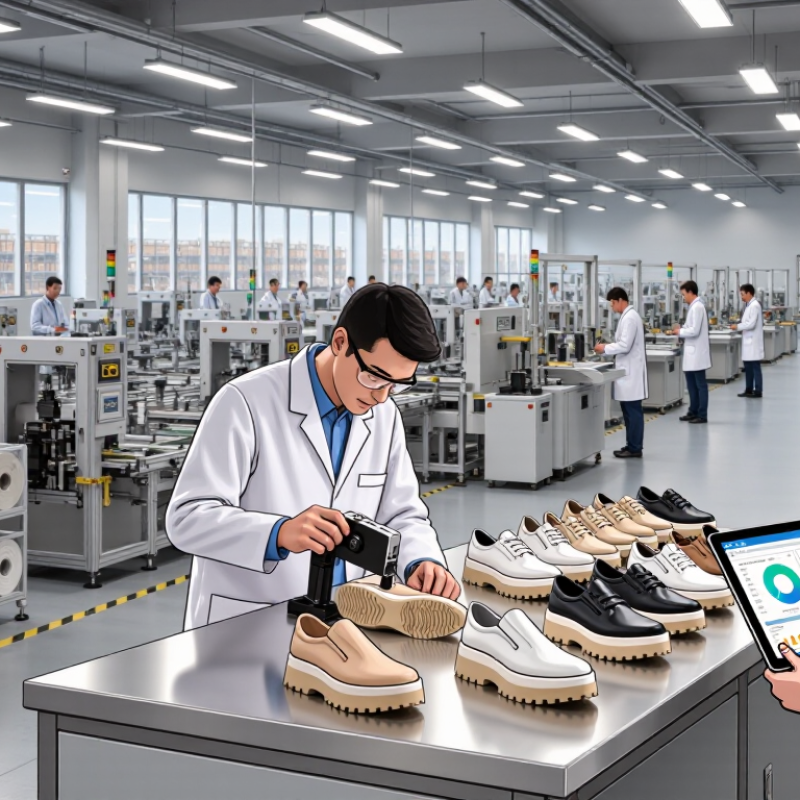
What Defines a Reliable Platform Footwear Supplier?
A reliable platform footwear supplier shows consistency before asking for a large order. Request physical samples in several sizes, not only one attractive prototype. Check platform height, sole bonding, stitching tension, and balance on a flat surface. A stable sample should not twist when pressed by hand. Small defects matter.
Professional suppliers explain their materials clearly. They should identify the upper, lining, outsole compound, adhesives, and packaging specifications. Ask how they control moisture, color variation, and sole hardness during production. Their answers should match written records, inspection reports, and sample results. Vague promises are warning signs.
Production evidence matters more than polished presentations. Review factory images, quality procedures, lead-time records, and replacement policies. If possible, arrange an independent pre-shipment inspection. Reliable communication is also practical: replies should be specific, dated, and easy to verify. A supplier that admits a limitation can be more dependable than one claiming perfection. That deserves attention.
Do not judge only by price. Low quotes may hide thinner materials, unstable sizing, or weak after-sales support. Confirm minimum order quantities, testing responsibilities, payment stages, and approved sample procedures before production. Keep every change in writing. Even experienced buyers can overlook packaging compression or color differences between batches. A dependable supplier welcomes careful questions and corrects mistakes without shifting blame.
How to Assess Supplier Quality, Materials, and Production Standards
Choosing a platform footwear supplier requires more than comparing prices. Quality begins with consistent materials and controlled production. During supplier evaluations, request recent samples, not only catalog photos. Inspect the platform for even height, stable balance, and clean bonding. A shoe that rocks on a flat table needs investigation.
Ask for material specifications, including upper composition, lining content, outsole density, and adhesive type. Reliable suppliers should explain their inspection process and provide relevant test records. Check stitching tension around straps and stress points. Examine the insole after repeated bending. Small wrinkles may reveal poor lasting control. I have seen attractive samples fail because the final batch used different foam density.
Tips: Visit the factory when possible. Review incoming-material records and production checkpoints. Ask how rejected pairs are isolated. Request a pre-shipment inspection with clear acceptance criteria. Confirm that workers follow documented procedures, even when orders are urgent. Production standards should cover cutting, molding, assembly, finishing, packing, and traceability. Independent testing can help verify slip resistance, bond strength, color transfer, and dimensional stability. Still, reports are not enough. Compare them with physical samples and current production. Some suppliers present excellent paperwork but weak floor discipline. That gap deserves attention. Conversely, a smaller factory may perform well while needing stronger documentation. Evaluate evidence, not impressions.
How to Choose the Best Platform Footwear Supplier?
Recommended assessment weights for evaluating supplier quality, materials, and production standards
Product quality and testing receive the highest weight because platform footwear must maintain structural stability, outsole durability, and consistent sizing. Materials traceability covers upper, lining, insole, outsole, adhesives, and supplier documentation. Production controls, compliance records, and delivery capacity should also be verified through samples, factory records, inspection reports, and corrective-action procedures.
Which Certifications and Compliance Requirements Should You Check?
A reliable platform footwear supplier should prove compliance, not merely display certificates. The World Footwear Yearbook 2024 reported approximately 22.4 billion pairs produced worldwide in 2023. At this scale, weak documentation can create serious quality and traceability risks.
Check whether ISO 9001 covers the actual factory producing your platform shoes. Confirm the certificate number, site address, scope, and expiry date. ISO 14001 can indicate structured environmental management, while ISO 45001 addresses occupational health and safety systems. These certificates do not guarantee perfect production. They show controlled processes.
Material safety requires separate evidence. Ask for recent laboratory reports covering restricted substances under REACH for European sales and CPSIA requirements for United States sales. For textiles, linings, adhesives, and dyes, request applicable chemical screening, not a generic “passed” statement. OEKO-TEX certification may support safer material verification, but check the certified component and validity period carefully. Social performance also matters. The International Labour Organization continues to identify workplace safety and excessive working hours as persistent supply-chain concerns. Request an independent social audit, worker-age controls, wage records, and corrective-action reports. I would not accept one polished audit as final proof. Factories change, and documentation can become outdated faster than buyers expect.
How to Compare Pricing, Minimum Orders, and Production Capacity
A reliable platform footwear supplier should be compared through more than the unit price. Request a detailed quotation covering materials, outsole construction, packaging, sampling, and delivery terms. A low quote may exclude mold charges or inspection costs. Numbers can mislead. Compare the landed cost, not only the factory price.
Minimum order quantities can change your cash flow quickly. Ask whether the supplier accepts mixed sizes, colors, or small trial runs. During one sourcing project, a low MOQ looked attractive, but repeated sampling fees made the order more expensive. Confirm deposit percentages, balance dates, and the cost of adjustments in writing. Ask for evidence.
Production capacity also needs careful checking. A supplier may claim to produce thousands of pairs monthly, yet seasonal orders can fill its lines. Request a current production schedule, daily output by model, and typical lead times. Capacity is not availability. Check whether critical processes, such as sole molding and bonding, are handled internally or outsourced. Outsourcing is not automatically risky, but it requires clear quality controls and responsibility.
Review samples under normal use, including bending, surface rubbing, and size consistency. Discuss defect limits before placing an order. A video call can show equipment, storage conditions, and workers’ actual workflow, although it cannot replace an on-site audit. Leave time for delays. Factories sometimes promise dates too confidently. This deserves reflection. A supplier who admits constraints may be more dependable than one offering perfect answers.
How to Verify Samples, Communication, and Long-Term Support
A reliable platform footwear supplier should prove quality before discussing volume. Request samples in your target sizes, colors, and sole materials. Check platform height, bonding lines, stitching, edge finishing, and inside comfort after several hours. I prefer wearing one sample on concrete and stairs. Photos can hide uneven balance. Ask for material specifications, the sample date, and any changes planned for production. A small difference matters.
Communication reveals operational skill. Send a clear measurement sheet and request answers in writing. Judge clarity, not speed. Ask about size tolerance, lead time, replacement procedures, and inspection standards. Strong replies include specific numbers and practical solutions. I once worked with a supplier who answered within minutes but missed the heel width twice. That mistake delayed the fitting review. Fast communication is not always useful communication.
Long-term support should be tested before a large order. Request a small pilot run and review each pair against the approved sample. Discuss packaging, inspection records, production updates, and how defects are documented. A dependable contact explains who handles corrections and how quickly they respond. Keep approvals, measurements, and revisions in one shared record. Do not rely on promises alone. The first sample is rarely perfect. Good support appears when a supplier accepts a correction, explains the cause, and prevents the same issue from returning.