
Leave Your Message

10 Boots Shoe Buying Tips for Global Buyers?

Buying a Boots Shoe across borders is not simply a matter of choosing a popular style. Fit, materials, climate, sizing systems, and return policies can change the buying outcome. A boot that feels secure in a European showroom may feel too warm in Singapore or too narrow after a long winter commute.

The World Footwear Yearbook 2024 reported that global footwear production reached approximately 23.9 billion pairs in 2023. That scale creates choice, but also creates confusion. Product descriptions may hide differences in leather thickness, waterproof membranes, outsole compounds, and manufacturing consistency. Buyers need evidence, not attractive photographs. Check measured dimensions, supplier records, customer feedback, and certification details where relevant. Small details matter.

Podiatrist Dr. Jacqueline Sutera offers a practical rule: “A shoe should feel good in the store.” That advice supports every Boots Shoe purchase, especially when international returns are expensive. Measure both feet late in the day. Wear the socks you will actually use. Leave space near the toes. Test heel movement on a firm floor.

These ten tips will examine fit, construction, sizing conversion, weather resistance, ethical sourcing, and after-sales support. They will also consider wholesale buyers managing samples, minimum orders, and inconsistent size charts. No checklist is perfect. Personal foot shape still matters. A few recommendations may need adjustment after real-world wear. That is the honest part. Reliable buying comes from combining professional guidance with careful testing, not trusting one impressive claim.
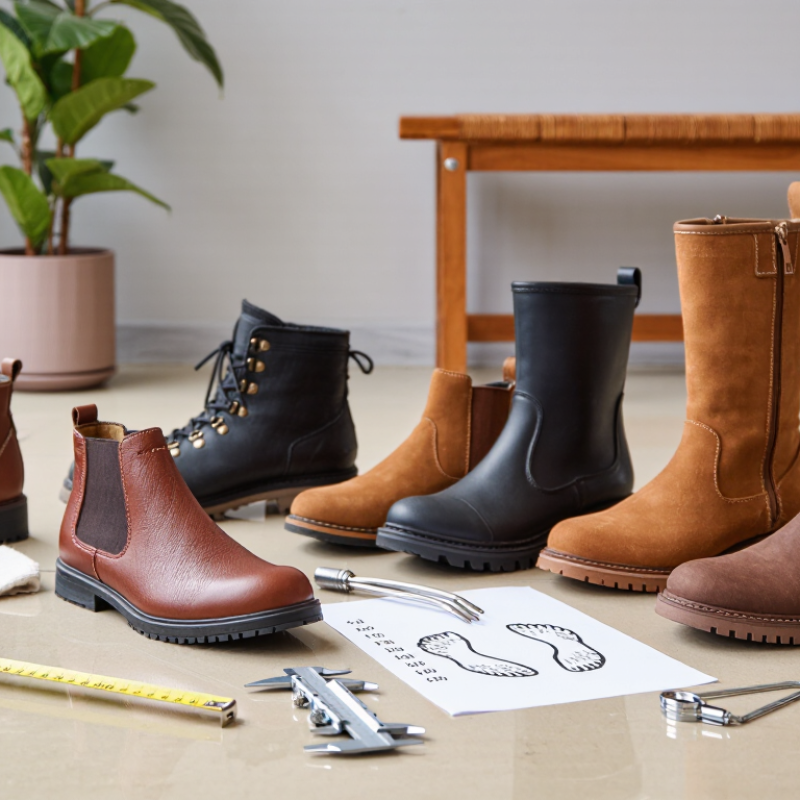
10 Boots Shoe Buying Tips for Global Buyers?

Understanding Global Boot Styles, Uses, and Buyer Requirements

Global boot buying starts with local use, not attractive photographs. A desert work boot needs airflow, a cold-weather boot needs insulation, and a rain boot needs sealed construction. Match shaft height with climate, clothing, and riding or walking needs. Check the toe shape carefully. Wide feet often require a broader last, while narrow heels need secure lacing. Small details matter.

Grand View Research estimates the global footwear market reached about USD 488 billion in 2023. This scale hides major regional differences. World Footwear’s 2024 Yearbook also shows that footwear production and consumption remain highly concentrated across major Asian and European markets. Buyers should not treat one size chart as universal. Convert measurements in millimeters, request a physical sample, and test both feet with intended socks. EU, US, UK, and regional sizing can vary.

Material choice affects cost and performance. Full-grain leather may age well, but it needs conditioning and consistent humidity control. Synthetic uppers can reduce weight and simplify cleaning. Inspect outsole rubber, stitching density, heel stability, and lining thickness. Ask suppliers for abrasion, flex, water-resistance, and cold-temperature test results. Confirm carton dimensions, labeling, color tolerances, and replacement policies before ordering. I have seen attractive samples fail because the outsole became stiff in cold storage. That mistake is easy to miss. A careful buyer should also review worker feedback, return rates, and wear-test photos from the target climate. Data helps, but field evidence remains essential.
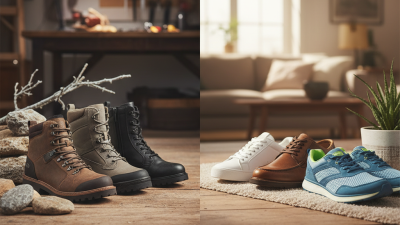
10 Boots Shoe Buying Tips for Global Buyers: Understanding Global Boot Styles, Uses, and Buyer Requirements

Typical commercial shaft-height ranges help buyers match boot styles with intended use, climate, coverage, and packing requirements. Measurements are approximate and may vary by size, gender, and product construction.

Buying insight: Ankle and Chelsea boots are easier to pack and commonly suit urban use. Hiking boots provide additional ankle coverage, while rain and knee-high boots offer greater protection in wet conditions and cold weather. Buyers should confirm sizing standards, waterproof construction, outsole grip, lining materials, and regional climate requirements before placing orders.

Checking Materials, Construction, Sizing, and Fit Standards

10 Boots Shoe Buying Tips for Global Buyers

When buying boots across borders, material claims need physical checking. Full-grain leather should show consistent grain, clean edges, and a natural smell. Yet smell alone proves little. Ask for fiber composition, thickness, lining details, and test samples. Synthetic uppers can perform well when coated evenly and bonded securely. Check for peeling, wrinkles, and exposed mesh around eyelets. Moisture resistance also needs a stated test method, not vague “waterproof” wording.

Tip: Inspect construction under bright light. Pull the upper gently near the heel and toe. Loose stitches, uneven seam spacing, or excess adhesive signal production risk. Examine the outsole bond, heel attachment, insole support, and flex point. A stitched welt may improve repairability, but it does not guarantee durability. Request abrasion, flexing, and slip-resistance reports when relevant. Standards differ by destination, so confirm the required market specification. Sample approval should include photos, measurements, and tolerance limits.

Tip: Treat sizing as a measurement task. Measure both feet in millimeters, wearing the intended socks. Compare results with the factory’s actual last measurements, not only regional size labels. Leave practical toe room, especially for insulated winter boots. Check instep height, heel hold, calf opening, and ankle movement. A boot can match length yet pinch across the forefoot. No chart is perfect. Even careful teams can miss width changes between production batches. Test several sizes on real users, record pressure points, and inspect fit after walking for fifteen minutes.

10 Boots Shoe Buying Tips for Global Buyers: Checking Materials, Construction, Sizing, and Fit Standards

No. Buying Dimension What to Check Reliable Data or Standard Practical Buyer Action Common Risk
1 Upper Material Confirm whether the upper uses full-grain leather, corrected-grain leather, suede, textile, or synthetic material. Request material composition and thickness in millimetres. Leather quality is commonly evaluated by surface finish, fibre structure, thickness, and flexing performance. Textile and synthetic materials should include fibre or polymer composition. Ask for a material specification sheet, close-up photographs, and a sample showing the reverse side of the material. Material names such as “premium leather” may not identify the actual leather type, coating, or thickness.
2 Water Resistance Distinguish between water-repellent, water-resistant, and waterproof construction. Check whether the tongue, seams, gusset, and entry opening are protected. Water penetration and absorption can be tested using footwear test methods such as ISO 20344. Results depend on the test method and product category. Request the test method, test duration, treated area, and pass criteria rather than accepting an unqualified waterproof claim. A water-resistant upper can still leak through unsealed seams, eyelets, or the tongue.
3 Construction Method Identify whether the boot is cemented, stitched-and-cemented, vulcanized, or welted. Inspect the bond line, stitching, and sole attachment. Construction choice affects flexibility, weight, repairability, and resistance to sole separation. A visible welt does not automatically prove that the sole is fully stitched through the welt. Request a cross-section image or construction diagram and inspect random production samples for consistent bonding and stitching. Decorative stitching may not contribute to structural attachment.
4 Outsole Compound Check whether the outsole is rubber, thermoplastic rubber, polyurethane, EVA, or a multi-layer combination. Review hardness, tread depth, and temperature range. Rubber generally provides strong abrasion and traction performance; EVA is lightweight and cushioning-focused; polyurethane balances cushioning and durability but can degrade under unsuitable storage conditions. Match the outsole compound and tread pattern to the intended surface, climate, and work environment. Deep tread alone does not guarantee good grip on wet, oily, icy, or smooth surfaces.
5 Interior Comfort Evaluate lining breathability, moisture management, seam placement, collar padding, and removable insole design. Comfort depends on foot climate, sock thickness, last shape, cushioning, and pressure distribution—not only on the lining material. Test boots with the socks and insoles that will be used in the target market. Check for abrasive seams around the heel and toe box. A soft lining may retain moisture if the boot has limited ventilation.
6 Size Conversion Compare the seller’s size chart using foot length in millimetres or centimetres. Do not rely on US, UK, or EU labels alone. ISO 19407 provides guidance for converting footwear sizing systems. Conversion values are approximate because lasts and allowances vary by manufacturer. Measure both feet while standing and use the larger measurement. Compare it with the product’s internal length or recommended foot-length range. The same labelled size can fit differently because sizing systems and internal allowances are not identical.
7 Width and Volume Check forefoot width, instep height, heel width, and overall foot volume. Confirm whether width options are available. Mondopoint sizing, described in ISO 9407, expresses foot length and width in millimetres. Many retail size charts do not provide width information. Request measurements for the last or finished boot, especially ball girth, instep girth, and shaft circumference. Increasing length to compensate for insufficient width can cause heel slip and poor walking stability.
8 Fit and Movement Check heel hold, toe clearance, flex point, ankle support, and whether the foot slides forward during walking. A suitable fit normally leaves functional toe space while keeping the heel secure and allowing the foot to flex near the ball of the foot. Walk, bend, climb stairs, and squat while wearing the intended socks. Test both boots because feet are often slightly different in size. Testing only while seated can conceal heel movement, pressure points, and toe contact during use.
9 Safety and Use Requirements Determine whether the boots are for casual use, hiking, industrial work, electrical environments, cold weather, or wet conditions. Safety footwear may require standards such as ISO 20345, while protective footwear can fall under ISO 20346 or ISO 20347. The applicable standard depends on the hazard and product classification. Verify the exact standard edition, marking, tested features, and declaration or certification documents for the destination market. General outdoor boots should not be treated as certified protective footwear without documented compliance.
10 Quality Control and After-Sales Support Inspect pair matching, colour consistency, stitching density, adhesive overflow, eyelet security, sole alignment, and packaging. Use a written inspection checklist with measurable tolerances for size, appearance, bonding, stitching, and functional defects. Request a pre-shipment inspection, retain approval samples, and confirm the return, replacement, repair, and spare-insole policy before purchase. Without documented tolerances and inspection records, quality may vary between production batches.

Buyer reminder: Fit, material performance, and compliance should be verified against the intended use, destination climate, local regulations, and the supplier’s current technical documentation. International size conversions are reference values; the product-specific measurement chart should always take priority.

Comparing Suppliers, Prices, Minimum Orders, and Customization Options

Global boot sourcing is a scale game. The World Footwear Yearbook 2024 reports 22.4 billion pairs produced in 2023, with Asia supplying 87.4%. This concentration creates choice, but not automatic quality. Compare at least three suppliers using identical tech packs, outsole drawings, material details, and packaging instructions. Ask for dated factory photos and a recent production sample. A polished sample can still hide weak stitching.

Compare landed cost, not only the quoted unit price. Include sampling, tooling, packaging, freight, duties, inspection, and payment fees. Request prices at 100, 300, and 1,000 pairs. Minimum orders often change by color, outsole mold, and material. A supplier may accept 100 pairs in stock colors, but require 500 pairs for a new sole. Confirm whether MOQ applies per style, color, or size range. Keep every answer in writing. Small detail, big risk.

Customization needs a staged plan. Start with one fit sample and one color sample. Then test flexing, abrasion, water resistance, and zipper strength. The BoF-McKinsey State of Fashion 2024 survey identifies supply-chain disruption as a leading industry risk. Smaller pilot orders can limit exposure. Still, testing one pair is weak evidence. Inspect several pilot pairs and record defect rates. Allow 10–15% cost tolerance for revisions, but challenge unexplained increases. Some assumptions will fail. Document them.

Verifying Quality, Certifications, Packaging, and Product Samples

Global boot buyers should verify quality before discussing price. Request a detailed specification sheet for leather, rubber, lining, stitching, and sole hardness. Ask how measurements are taken. Small differences can affect comfort and returns.

Product samples reveal details that photos hide. Inspect the heel balance, toe shape, glue marks, seam tension, and insole thickness. Wear one pair for several hours if possible. Test the outsole on wet and dry surfaces. Check whether the size label matches the measured length. I once trusted a sample that looked excellent, but its zipper failed after repeated use. That mistake changed my inspection process.

Certifications need careful checking. Confirm the issuing body, certificate number, validity period, covered product, and manufacturing site. Do not accept a logo alone. Requirements differ by destination and boot type, so use current official regulations or an independent testing laboratory.

Packaging also deserves evidence. Request carton dimensions, inner protection, moisture control, barcode placement, and drop-test results. Photograph sealed cartons before shipment. Ask for a packing list that matches the actual quantity and size breakdown. Some suppliers provide neat paperwork but weak packaging. That is easy to miss. One more sample inspection may feel slow, yet replacing damaged boots costs more.

Planning Shipping, Import Duties, Returns, and After-Sales Support

When buying boots internationally, shipping should be planned before payment. I check the seller’s delivery zones, carrier options, tracking coverage, and estimated transit time. A pair packed on a rainy Friday may need extra protection against moisture and crushing. Ask whether the box travels by air, ground, or a mixed service. This affects speed and handling. I also confirm the delivery address format, phone number, and customs contact details. Small errors can delay a parcel for days. I learned this after entering an incomplete apartment number.

Import duties and taxes are separate from the listed boot price in many markets. Request a written estimate and ask who collects the money at delivery. Keep the invoice, payment record, and product description together. Customs may need accurate material, value, size, and country-of-origin information. Do not accept vague declarations. They create expensive confusion. I compare the final landed cost, not just the online price. Still, estimates can change, so I leave a modest budget buffer. That feels wasteful, but surprise charges feel worse.

Before ordering, read the return window, eligibility rules, return address, and shipping responsibility. Measure both feet and save photos of the boots before wearing them outdoors. Some sellers accept unworn returns only, while others handle manufacturing faults differently. Confirm how refunds are issued and how long inspection may take. After-sales support should offer a reachable email, case number, and clear response times. Keep the packaging until the fit is proven. I once discarded it too soon. That was careless. Ask how replacement parts, fit advice, or repair guidance are handled across borders. A helpful support team can matter more than a small discount.